California voters reject Prop. 45 by 55.7%, keeping environmental review rules intact
The 44.3% rejection rate preserves the state's 1970 Environmental Quality Act, despite $41 million in campaign spending by business groups.
By Jonathan Fedorov ·
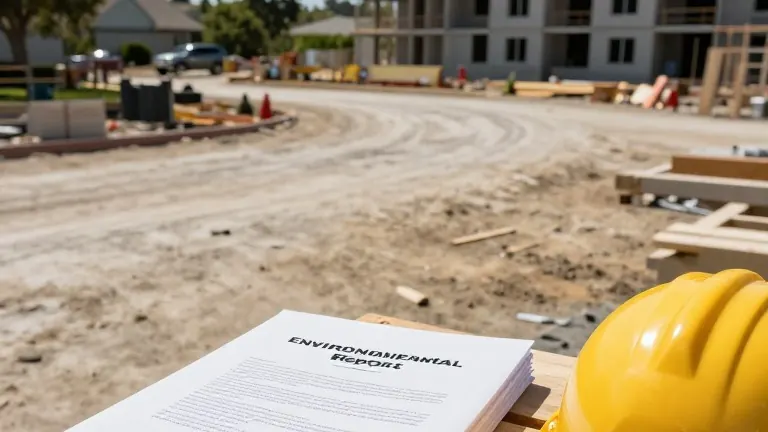
California voters rejected Proposition 45 on Saturday, maintaining the state's existing environmental review requirements for major development projects. With 76% of ballots counted, the measure lost with 55.7% of the vote against 44.3%.
The result keeps the California Environmental Quality Act, or CEQA, unchanged. Since 1970, the law has required public agencies to assess the environmental impacts of proposed developments and implement measures to mitigate those harms. The rejected ballot initiative, titled the Building an Affordable California Act, would have capped environmental reviews for specific projects at 365 business days and required courts to resolve related litigation within 270 calendar days.
Supporters of the measure, including the California Chamber of Commerce, argued that faster approvals would lower building costs and pass savings to consumers. They targeted housing, water, broadband, and transit projects deemed essential to the state's infrastructure. The Yes campaign spent $41 million to promote the proposal. The Building a Better California political action committee was the largest donor, contributing $10 million. That group is partially funded by Google co-founder Sergey Brin and former CEO Eric Schmidt. Major utility companies Pacific Gas & Electric Company and Southern California Edison together donated $4.4 million.
Opponents argued the measure would weaken protections for air, water, and natural resources. A coalition of environmental, health, and union organizations spent $30 million to defeat the proposal. Wendy Schmidt, a Democratic philanthropist, provided the largest single donation of $10 million. The political action committee Clean and Healthy California Sponsored by Environmental Organizations contributed an additional $7 million. Woody Little of the No on 45 campaign said voters sent a clear message to corporate developers and data center builders that they would not accept a broad assault on state law. Little noted the opposition was outspent but not outgunned.
The vote highlighted a split among pro-housing and local government groups. While the California Building Industry Association and the California Council for Affordable Housing supported the measure, many Bay Area housing advocates opposed it. East Bay for Everyone and the Greenbelt Alliance backed the No campaign. Flagship advocacy groups Abundant Housing Los Angeles, California YIMBY, and YIMBY Action remained neutral. The division centers on whether California should prioritize building outward onto undeveloped land or concentrate new housing in urban centers. Max Dubler of California YIMBY wrote that the state must solve housing and climate crises simultaneously by building denser communities with alternatives to automobile dependence.
Local government associations were divided in their support. The California Municipal Utilities Association opposed the measure, while the League of California Cities and the California State Association of Counties remained neutral. The California Democratic Party opposed the initiative, whereas the California Republican Party supported it. County-level Republican groups were split on the proposal.
Financial analyses of the measure produced conflicting projections. A report by Blue Sky Consulting Group, commissioned by the California Chamber of Commerce, estimated the proposal would generate $1.5 billion in savings and additional revenues for public agencies over ten years. Conversely, the nonpartisan Legislative Analyst's Office stated that local governments and public agencies would face initial costs as they adjusted to the new rules.
More Business · Rip-Off Report · Report a business · Got a Story?