Oregon's $10 billion fishing economy faces pressure
A veteran commercial fisherman argues that Bonneville Power Administration's infrastructure plans risk the habitat sustaining the region's outdoor and agricultural sectors.
By Idris Romero ·
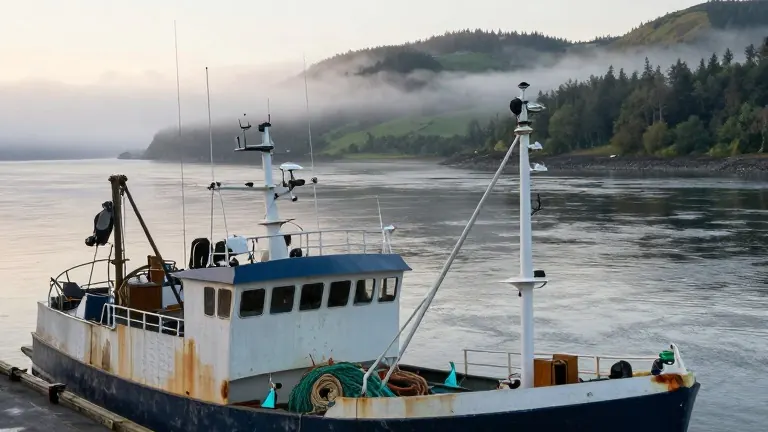
The Bonneville Power Administration is facing criticism from commercial fishermen who say its infrastructure investment plans threaten the salmon habitat that anchors a $10 billion annual economy in Oregon. Amy Grondin, a salmon troller with 30 years in the industry, contends that the utility is prioritizing energy affordability over the environmental protections necessary to sustain local livelihoods. Grondin has operated her own vessel for the past 15 years and fishes out of Newport, Oregon, while residing in Port Townsend, Washington. She serves on the board of Save Our Wild Salmon, an organization advocating for clean water and habitat restoration.
Grondin argues that state and federal fisheries management systems are designed to sustain salmon populations, yet fishing numbers continue to decline. Many commercial fishermen rely on second jobs during the winter because they can no longer support themselves solely through fishing. She states that healthy rivers and salmon constitute the local economy, making the push to reduce habitat protection costs in favor of energy affordability unacceptable.
The economic impact extends beyond the commercial fishing sector to include tourism and agriculture. Sport fishing drives tourism, and visitors contribute to the local economy by renting boat slips, purchasing fuel, buying groceries, and dining at restaurants. Grondin notes that these restaurants often serve locally caught fish, creating a supply chain that supports multigeneration family farms. These farms, like the salmon, depend on healthy rivers for irrigation. Grondin suggests that the local restaurant plate is a more accurate measure of economic health than the balance sheets of energy companies.
Recent analysis cited in the commentary indicates that approximately 225,000 indirect and adjacent jobs, along with 70,000 direct jobs, rely on outdoor activities, including commercial and recreational fishing. Together, this sector accounts for nearly $10 billion annually in Oregon's economy. Grondin warns that if the Bonneville Power Administration falls behind in protecting salmon, this major portion of the state's economy will suffer. She emphasizes that the numbers represent real people, including kayakers, sport fishermen, and farmers living in salmon country.
Grondin acknowledges the need for reliable and affordable energy to keep the lights on and maintain the economy. She relies on state-of-the-art technology, including radar and GPS plotters, to keep her vessel and crew safe at sea. However, she argues that protecting local businesses in the agricultural and outdoor economies must remain a priority. Before owning her own boat with her husband, Greg, she worked as a deckhand on Alaska salmon tenders, vessels that meet commercial fishing boats at sea to transport salmon to shore-based processors.
The commentary urges the Bonneville Power Administration and utility lobbyists to stop pitting different community groups against each other. Grondin maintains that investing in healthy rivers and salmon habitat is synonymous with investing in an inclusive and affordable economy for communities across Oregon. She expects the utility to manage the energy system with the same care and affordability she applies to maintaining her vessel for crew safety. Instead of sending larger bills each year, she argues the utility should make much-needed investments to become more reliable and less damaging to the environment.
Grondin's experience highlights the tension between energy infrastructure costs and environmental preservation. As a commercial fisherman, her livelihood depends directly on the health of the wild salmon population. The decline in these populations has been devastating for coastal communities and the commercial fishing industry. Her advocacy work focuses on ensuring that clean water and habitat protections remain central to sustainability efforts. The commentary serves as a call for the utility to align its infrastructure investments with the environmental needs of the Pacific Northwest.
More Business · Rip-Off Report · Report a business · Got a Story?