Tesla now needs its own maps for FSD after years of dismissing maps
Tesla has reversed its stance on maps, now building its own to enhance its Full Self-Driving system.
By Mei Ling ·
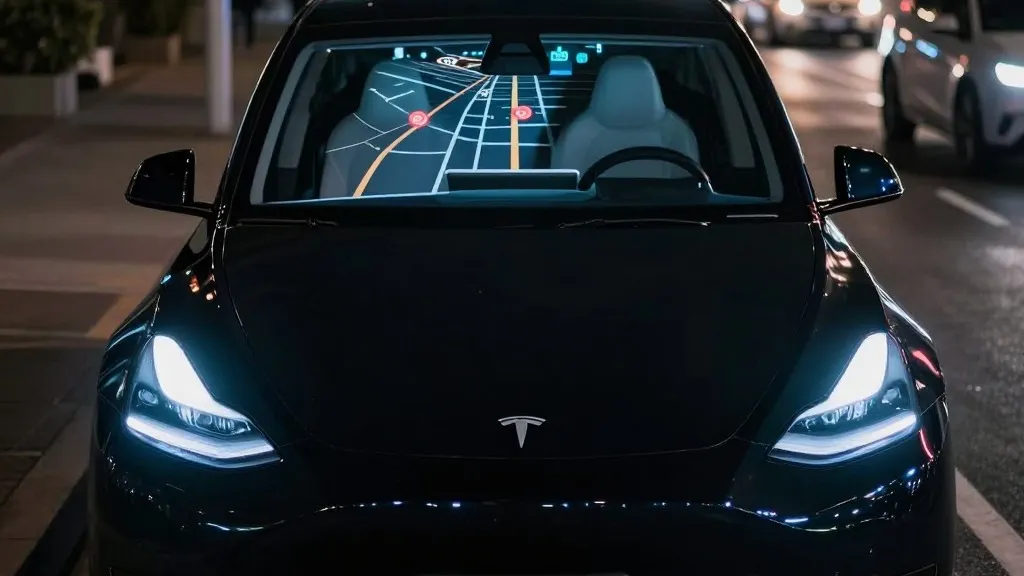
Tesla now says it needs its own maps for FSD after years of dismissing maps. The company’s head of AI described the effort on Tesla’s Q3 2026 earnings call, revealing a notable shift for a company whose CEO spent years arguing that self-driving systems relying on maps are brittle. And it shows Tesla’s fleet is now doing the same job Waymo’s cars do: mapping the roads so the self-driving system knows what it can’t reliably figure out on its own.
Tesla fans argue that Waymo’s approach differs because it creates HD maps with lidar, but ultimately both are creating their own maps; if your argument is that Tesla’s maps are less well-defined and needed for driving for different reasons than Waymo’s, you don’t really have an argument.
The question came from Tesla’s shareholder Q&A. A retail investor wrote that mapping “continues to be a problem” for FSD, listing speed limits, parking and typical routes as the three biggest issues, and asked why Tesla relies on third-party maps instead of its own. Tesla’s VP of AI, Ashok Elluswamy, agreed that “we shouldn’t be depending on external people’s maps.” He said Tesla is building its own maps using a new AI-based mapping and navigation architecture, fed by what the fleet collectively learns, that will also learn individual drivers’ preferences and respond to voice commands.
He said the technology will start handling the beginning and end of trips with FSD v15, and over the following months take over navigation, parking and destination handling. Tesla has gone back and forth on this before. In 2015, when it launched Autopilot, Tesla told Fortune it had started building high-precision maps with “100 times the level of granularity” of standard navigation, using data from its customer cars.
At its Autonomy Day in 2019, Elon Musk said Tesla had tried high-precision lane maps and realized it was “a huge mistake.” He called relying on them a “really bad idea” that makes a self-driving system “extremely brittle,” in the same presentation where he called lidar a “fool’s errand.” The message was clear: Waymo needed lidar and detailed maps, and Tesla would solve driving with cameras and AI alone, anywhere.
Source: Electrek