NASA Restructures Artemis Timeline and Resolves Orion Docking Protocol
The space agency has finalized new architectural changes for lunar landers, setting a firm trajectory for a 2028 crewed landing while eliminating a complex orbital requirement.
By Yasmin Farouk ·
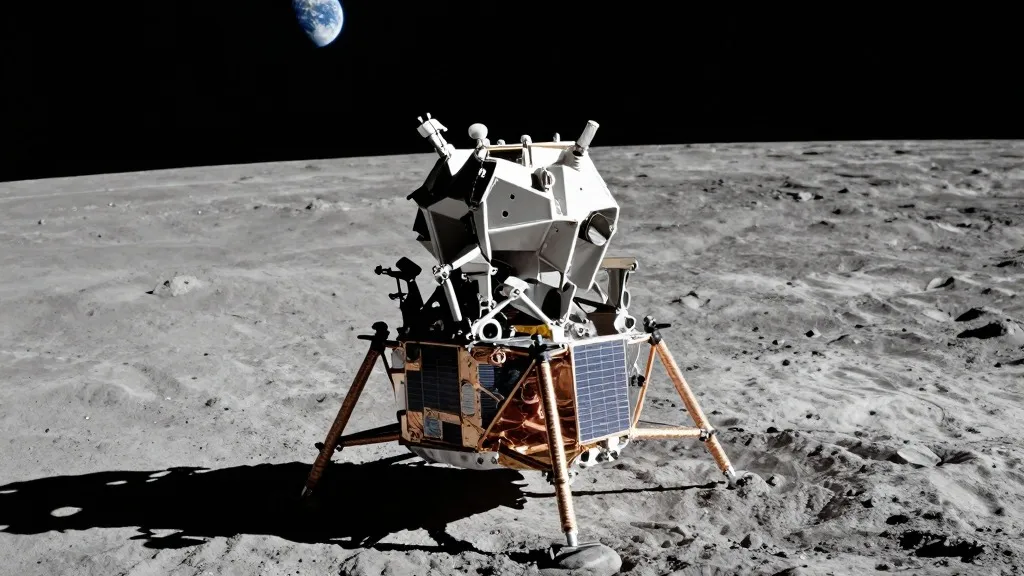
NASA has formally updated its lunar landing architecture, resolving a long-standing technical hurdle regarding the Orion spacecraft and confirming a 2028 target for the first crewed lunar landing in decades. In a comprehensive briefing held on Friday, agency officials detailed the revised plans for the Artemis program, marking the first time the full scope of these architectural changes has been publicly laid out. The primary shift involves altering how Orion interacts with commercial landers, specifically moving the docking phase for SpaceX’s Starship to high-Earth orbit rather than the previously planned lunar vicinity.
The most significant operational change affects the SpaceX contract. Under the new protocol, the Orion spacecraft will dock with the Starship lunar lander while still in high-Earth orbit before the combined vehicle transits to the Moon. This adjustment removes a complex requirement that had been a major point of contention in earlier discussions. Previously, the plan called for Orion to dock with Starship in a near-rectilinear halo orbit around the Moon, a maneuver that demanded significantly more energy and introduced additional technical difficulties. By shifting this step to Earth orbit, the agency has streamlined a critical phase of the mission profile.
The Blue Origin component of the Artemis program has also been restructured. The updated architecture for Blue Origin’s contribution involves four separate launches of the New Glenn rocket. Notably, this configuration eliminates the need for spacecraft-to-spacecraft refueling operations in space. Furthermore, the plan allows for the Blue Moon lander to rendezvous with Orion in low-Lunar orbit. This flexibility provides a distinct pathway that differs from the SpaceX approach, giving the agency multiple viable options for executing the crewed landing phase.
NASA officials reaffirmed their confidence in the current schedule during the presentation. They stated that the Artemis III mission, which serves as a demonstration of docking capabilities with both Blue Moon and Starship in near-Earth space, remains on track for a launch by summer 2027. Following this critical test, the agency is targeting a 2028 launch for Artemis IV, the mission that will actually place astronauts on the lunar surface. These dates represent the agency’s current best estimate for achieving its primary goal of returning humans to the Moon.
Administrator Jared Isaacman emphasized the agency’s readiness to execute the updated plan. He noted that the organization has the necessary mandate, resources, and stakeholder support to proceed. Isaacman described the current trajectory as an achievable path, highlighting the leadership team’s commitment to holding the lander companies accountable while providing them with the clarity needed to accelerate their development efforts. The administration has taken a close look at every element of the program to identify where changes could help facilitate execution.
The decision to modify the docking orbit for SpaceX was driven by specific engineering feedback. In meetings held in early 2026, SpaceX engineers identified the requirement to dock in a near-rectilinear halo orbit as a significant challenge. The orbit required more energy to reach and maintain, creating logistical and fuel efficiency problems. The cancellation of the Lunar Gateway project earlier this year inadvertently solved this issue for SpaceX by removing the infrastructure that had made the lunar-orbit docking necessary, allowing the agency to pivot to the simpler high-Earth orbit solution.
While the architectural changes are now formalized, the question remains whether the tight timeline can be sustained. The shift in strategy acknowledges substantial changes in how the program will be executed, but it also places increased pressure on the commercial partners to meet accelerated milestones. The success of the 2027 Artemis III demonstration will be the first major test of these new protocols, determining whether the 2028 landing target remains realistic or if further adjustments will be required.
Source: Ars Technica