Federal Agency Proposes Cyan Lights For Driverless Cars
Regulators are seeking to standardize the visual signaling of autonomous vehicles by mandating specific blue-green marker lamps.
By Aiko Yamamoto ·
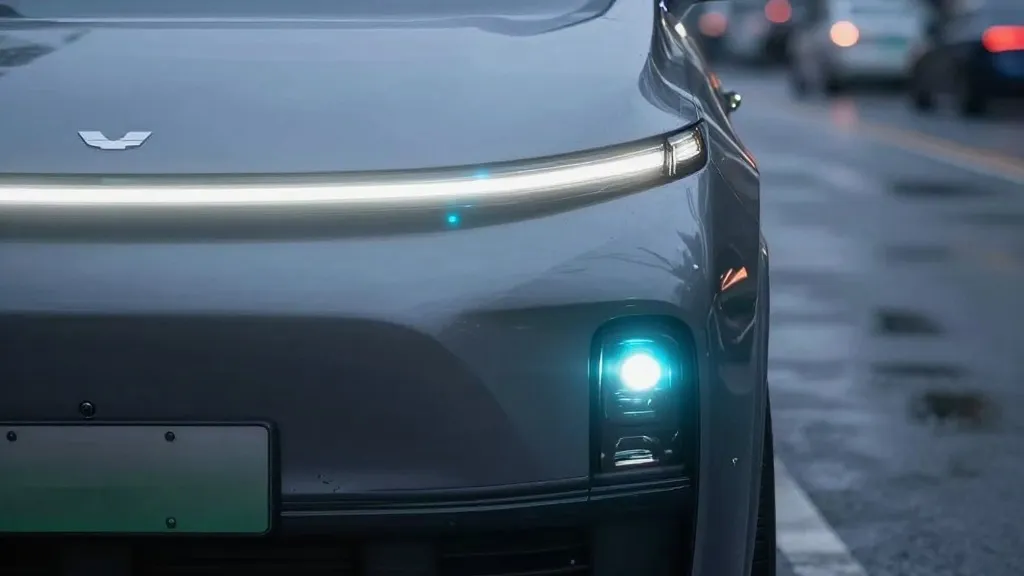
The National Highway Traffic Safety Administration has moved to standardize the visual language of driverless vehicles by proposing a new federal standard for cyan-colored marker lights. The agency released proposed changes to Federal Motor Vehicle Safety Standard No. 108, specifically targeting the design requirements for autonomous vehicles. This regulatory action aims to clarify how robotaxis communicate their operational status to the surrounding traffic environment.
The core of the proposal requires that automated driving systems signal their operation through a distinctive blue-green illumination. NHTSA argues that this specific color is necessary to provide a clear and consistent indication to law enforcement and other road users that a human is not at the wheel. The agency is seeking to establish a uniform national standard that can be adopted by major robotaxi operators such as Waymo, Nuro, and Zoox, as well as traditional automakers including General Motors and Mercedes-Benz.
The choice of cyan is driven by the need to avoid confusion with existing automotive lighting conventions. The auto industry currently utilizes red, amber, white, and flashing blue or red lights for functions such as braking, turn signals, headlights, and emergency response vehicles. By introducing a distinct blue-green hue, regulators believe they can fill a visual gap in the current spectrum without competing with established signals that drivers already recognize.
While the proposal draws on existing precedent, the federal government is looking to create a more cohesive framework. Mercedes-Benz previously received state-level approval for turquoise lights on its Level 3 Drive Pilot models, although the automaker later shifted its strategy toward a Level 2++ system. NHTSA intends to formalize these types of signals into a single federal rule, ensuring that any manufacturer opting to use them adheres to a consistent legal setup regarding color, brightness, and placement.
Under the proposed rule, the installation of cyan marker lights would remain optional for manufacturers. However, the creation of official federal standards for these components is designed to prevent a fragmented market where different companies use varying colors and signal patterns. By defining the technical specifications upfront, the agency aims to ensure that if an automaker chooses to implement these lights, the result is a standardized and legally compliant feature rather than an ad hoc addition.
In addition to adding new signaling requirements, the proposal seeks to remove legacy regulations that are less relevant for vehicles without human drivers. Current rules mandate the presence of physical hazard switches, manual beam shifters, and interior turn levers. NHTSA proposes eliminating these requirements to reduce unnecessary complexity in autonomous vehicle designs. The agency is also updating the 12.8-volt testing standard to accommodate modern LED architectures, thereby reducing administrative burdens for manufacturers building with contemporary technology.
Further simplifications include reconsidering the strict positioning requirements for high-beam and low-beam lights. The current standards dictate whether high-beam lights must sit above or below low-beam lights, a constraint that may be less critical for autonomous platforms. By relaxing these spatial rules, the agency hopes to give engineers more flexibility in designing lighting arrays that are optimized for sensor integration and aerodynamic efficiency rather than human ergonomics.
This regulatory update is part of a broader administrative effort by the Department of Transportation to streamline the deployment of autonomous vehicles. The government is working to make it easier for manufacturers to build cars that lack traditional human-control interfaces, such as steering wheels and pedals. The goal is to align federal safety standards with the evolving reality of software-defined vehicles, ensuring that regulatory frameworks do not hinder the market entry of new autonomous platforms.
Despite the push for streamlined standards, regulators continue to enforce existing rules strictly during the transition period. Last month, NHTSA initiated an audit query into the Tesla Cybercab to examine the technical data and certification processes relied upon by the company. The investigation focuses on the absence of specific design features, including sideview mirrors, pedals, and a steering wheel, which are currently required under the Federal Motor Vehicle Safety Standards. This enforcement action underscores the tension between the agency's desire to modernize rules and its duty to maintain current safety baselines.
Source: The Verge