Underdogs Pour $250,000 Into Long-Shot Congressional Races
Democratic candidate Lisa Kinney and Republican candidate George Austin describe the financial and logistical strain of running in deeply partisan districts.
By Jonathan Fedorov ·
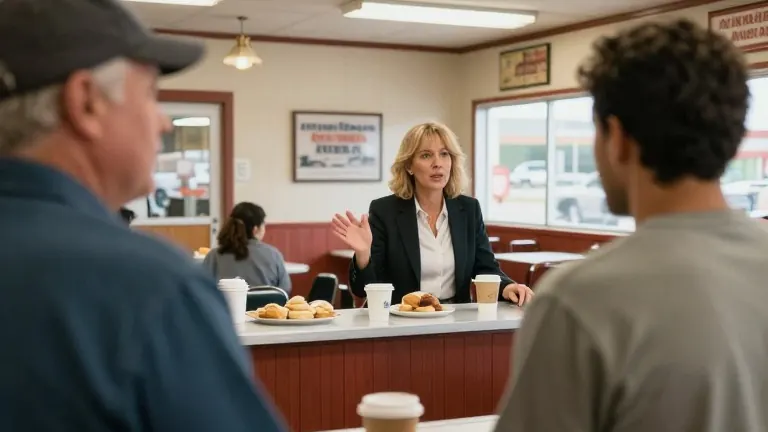
Eighty percent of congressional races this cycle are rated solid for one party or the other, according to election analysts. Candidates running against the political grain face campaigns marked by limited resources, dwindling donors, and scarce staff.
Lisa Kinney is running as a Democrat for the lone House seat in Wyoming. The state has sent only Republicans to Congress since the late 1970s. Kinney, a former state senator, operates without a formal campaign office. She relies on a small group of helpers and spends countless hours on the road to meet voters in person.
During a campaign stop in Casper, Kinney told reporters she wants to offer a moderate perspective that she feels is missing from local discourse. "I don't think the people of Wyoming always hear both sides," she said. "I'm a Wyomingite, so I'm still moderate no matter what."
Her opponent, a Republican, has run advertisements linking Kinney to progressive figures like Bernie Sanders and New York City Mayor Zohran Mamdani. Kinney called the comparison bemusing. She argued that her moderate stance allows her to bridge the gap between parties. "You need a person in there who's a moderate who can talk to Republicans, who can talk to Democrats," she said.
In Connecticut, George Austin is running as a Republican in the second congressional district. The district is a Democratic stronghold where the incumbent, Rep. Joe Courtney, has won reelection for 20 years. Democrats in the state have won 45 straight U.S. House elections since 2008.
Austin, a home builder and former football coach, has invested a quarter of a million of his own money into the race. He serves as his own scheduler and volunteer coordinator. Austin said he wants to show other working voters that challenging entrenched incumbents is worthwhile. "I want to win, I'm competitive and I believe in the cause," he said.
Eric Ostermeier, founder of the nonpartisan political news site Smart Politics, noted that 19 state delegations currently consist entirely of one political party. He said this is the highest number seen since 1953. Ostermeier cited gerrymandering and geographic sorting of voters as key drivers of these monolithic partisan tendencies.
Kinney and Austin both acknowledge the long odds. Kinney said she knows many voters will support the candidate with an R next to their name, but she maintains she can win. Austin said he is not in it for the superficial motivation of victory alone. "You can't just give it the ole college try," he said, adding that the race deserves serious effort regardless of the outcome.