Tanzania Election Unrest Death Toll Stands at 518, One Year On, With Answers Still Pending
Families of those killed in the protests that followed Tanzania's October 2025 vote say they have received no acknowledgment of their losses, while a second inquiry opened in August 2026.
By Idris Romero ·
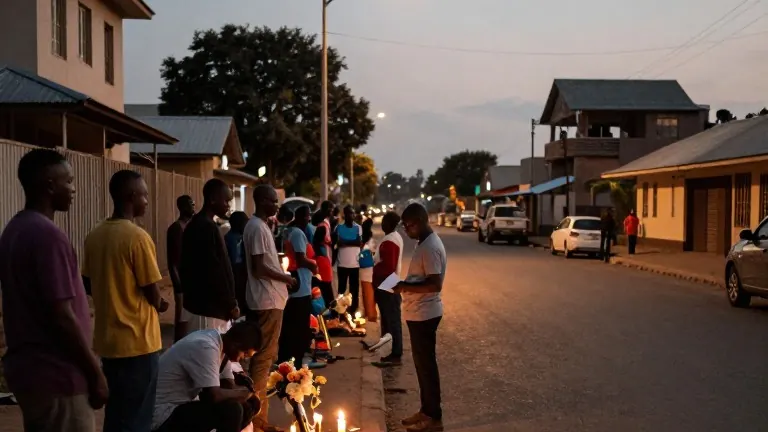
A government-appointed panel led by retired Chief Justice Mohamed Chande Othman determined that at least 518 people died from unnatural causes in the unrest surrounding Tanzania's October 2025 general election, and that more than 2,000 others were injured. Othman said the figure could be higher because some families buried relatives without taking them to morgues or notifying the commission. One year after the vote, relatives in Mwanza and elsewhere say they are still waiting for answers.
The Chande Commission found that many of the deaths resulted from gunshot wounds. Human Rights Watch's senior Africa researcher, Oryem Nyeko, said the count understates the toll. "It's very clear that it's far more than the 518 people that were presented by the commission," Nyeko said.
The unrest followed a campaign in which the main opposition candidate was excluded from the ballot. Tundu Lissu, who leads the Tanzanian Party for Democracy and Progress, known as Chadema, was arrested and charged with treason in April 2025, and the party was barred from the vote. Protesters on election day and afterward called for political reforms and the resignation of President Samia Suluhu Hassan. The president has described the unrest as an attempt to overthrow the government.
Reporting on the violence, Deutsche Welle reviewed videos, spoke with sources, examined police guidelines and advocacy research, and obtained a leaked police report. The material could not be tied to a confirmed date and location for every clip, in part because some footage surfaced late after internet blackouts or was shared anonymously to avoid reprisals. The evidence indicates police likely exceeded their guidelines and training, including in cases involving people who were not protesting. Police rules restrict firearm use to situations where it is absolutely necessary.
The Centre for Information Resilience documented uniformed personnel beating civilians with sticks in Dar es Salaam, and others standing near where protesters were shot dead. Videos from Mwanza showed the bodies of young men reportedly killed by people in police uniforms while they watched television in a video hall. Human Rights Watch also cited that case, and the Chande Commission flagged it for further investigation. Security analyst Nicodemus Minde said the commission left central questions open. "The Commission did not really tell us who was responsible and why," Minde said.
The commission recommended further investigation but named no security bodies, officers or commanders. The Ministry of Home Affairs declined to comment on the allegations, saying it would interfere with the legal process, and police had not responded by publication. A second inquiry, chaired by retired Justice Shaban Ally Lila, began gathering evidence in August 2026. Its findings are pending.
For families, the inquiries have not addressed what they describe as a lack of acknowledgment. Raha, a Mwanza resident whose name was changed for safety, raised a nephew who died during the protests. "The government should have asked for forgiveness for what happened. Even just offering condolences," she said. Zuri, whose name was also changed for safety, said her brother and her son were killed. "We lost our children; we lost our brothers. Why hasn't the government taken any initiative to at least visit us?" Zuri asked. "They behave as if nothing happened. Is this justice? There is no justice in Tanzania."