Orange County Transportation Authority Wins Approval for $305 Million San Clemente Rail Protection Project
The California Coastal Commission unanimously approved the plan on Thursday, which includes a 1,200-foot seawall and hundreds of thousands of cubic yards of sand to combat erosion.
By Tunde Martin ·
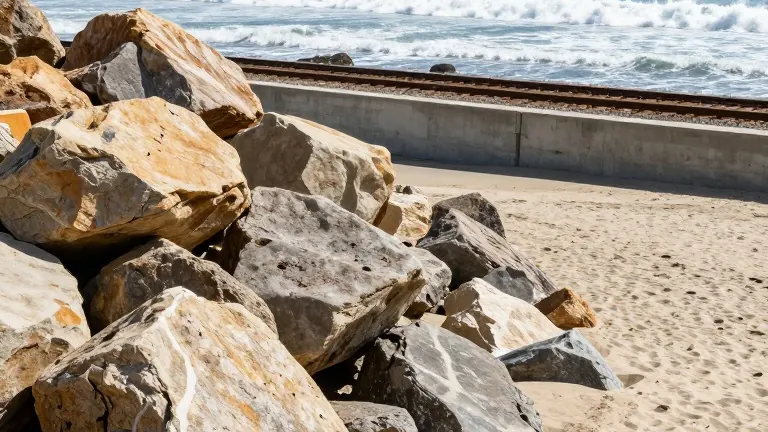
The California Coastal Commission unanimously approved a $305 million plan on Thursday to protect a vulnerable section of railroad in San Clemente. The decision came after extensive debate over how to balance the preservation of critical infrastructure with public access to the coastline. Commissioners voted to grant the permit for what was described as one of the largest beach encroachments the agency has reviewed.
Transportation officials stated that coastal erosion, high tides, and strong swells have increasingly threatened the rail corridor. The Orange County Transportation Authority reported that recent coastal conditions have damaged the tracks, leading to frequent suspensions of rail service. Darrell Johnson, the authority's CEO, noted that the project is complex and essential for maintaining the balance between public infrastructure and coastal access.
The approved plan involves placing 690,000 cubic yards of sand on San Clemente beaches and constructing a 1,200-foot seawall at San Clemente State Beach. It also includes retaining 48,000 tons of riprap, which consists of large boulders, along the shore. Most of these boulders were already placed under emergency permits, but the plan adds 2,100 tons of new material. This specific component drew the most criticism during public testimony.
Sarah Schneider, a San Clemente resident, argued that the project prioritizes the railroad over the public. She described the sight of a protected rail line surrounded by rock while the beach disappears as a preventable tragedy. Gregory Ray, another local resident, criticized the long-term use of the boulders, stating that the transportation authority created a disruptive structure and should be required to implement a permanent solution.
Various speakers, including city leaders and residents, supported the addition of sand but expressed concern about the boulders. Several urged the commission to require the transportation authority to guarantee at least 50 feet of public beach access in an area where the coastline is already shrinking. Sarah Spinuzzi of Orange County Coastkeeper reminded the commissioners of the long-term impact of the decision, noting that decades of inaction have left the community with limited options.
Following hours of discussion, the commission voted unanimously to approve the permit. Commissioners stated they will reconvene in at least five years to determine and recommend an appropriate beach-width requirement. The commission's executive director explained that the case illustrates the difficulty officials face when weighing the protection of public infrastructure against the maintenance of public beach access.
A separate study will now examine the requirements for removing or relocating the railroad entirely. This assessment aims to evaluate potential alternatives to protecting the existing rail line in its current location.