Northwest Hay Prices Jump $50 as Drought Shrinks Supply
Alfalfa costs now range from $230 to $250 per ton, a sharp increase driven by reduced acreage and high diesel costs.
By Tunde Martin ·
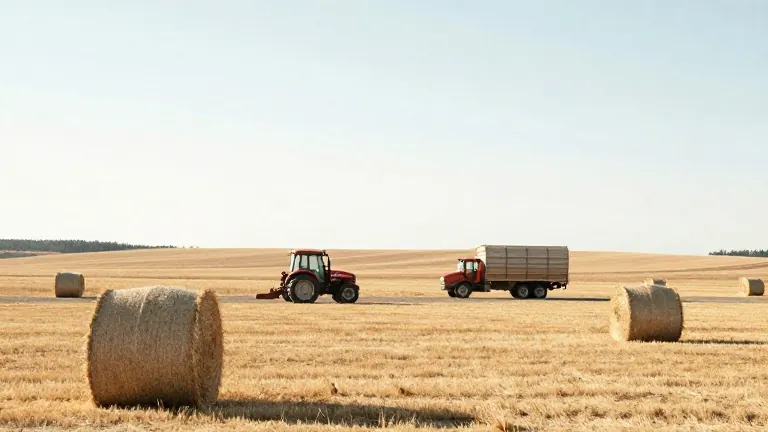
Drex Gauntt, a hay farmer based in Burbank, Washington, reports strong buyer interest and rising prices for his crops. This surge in demand signals an active market where buyers continue to contact sellers throughout the season, according to Gauntt. The increased activity reflects a tight supply environment across the region.
Industry data confirms the price spike. Josh Callen of The Hoyt Report, a Western hay industry news company, notes that alfalfa prices have increased by more than $50 per ton. Last year, the commodity sold for between $160 and $185 per ton. Current market rates sit between $230 and $250 per ton.
Several factors are driving the shortage. Drought conditions across the West reduced initial hay yields. Specific droughts in Idaho and Utah pulled hay out of Oregon markets. Additionally, wildfires forced cattle off rangelands earlier than usual. Animals that typically remain in high elevations until September or October returned to lower pastures by July. In these confined areas, the livestock required more hay, increasing local demand.
Export channels have also faced disruptions. Callen points to the war in Iran and elevated shipping rates as key obstacles. Export volumes have hit their lowest levels since 2014. Historically low prices over the past two years have tested farmers, pushing some major companies into bankruptcy and reducing new acreage planted.
Scot Courtright, owner of Courtright Enterprises, a hay buying and exporting firm, states that hay acres in the Northwest have dropped by as much as 25%. Production in Idaho, Utah, Wyoming, and Nevada has also declined due to drought. With domestic demand remaining stable, these supply cuts are pushing prices higher.
Growers face high operational costs that squeeze profits. Martin Thompson, a rancher in New Princeton, Oregon, says hay prices do not adequately cover the cost of diesel. Diesel prices are near record levels, and drought has limited natural rain. Farmers rely on diesel tractors for cutting and baling, as well as trucks for transport. Thompson, who grows and sells his own hay, notes that even growers are not making what they should given fuel costs.
The Northwest News Network, a collaboration between public media organizations in Oregon and Washington, produced this report. Anna King serves as the reporter for Northwest Public Broadcasting. The story is part of OPB’s effort to provide quality journalism to the region.
More Business · Rip-Off Report · Report a business · Got a Story?