New Orleanians Replace Katrina-Lost Photos With Living Memory
Twenty-one years after the storm, families in the city are using genealogy, shared traits, and digital archives to reconnect with ancestors whose physical records were destroyed.
By Tunde Martin ·
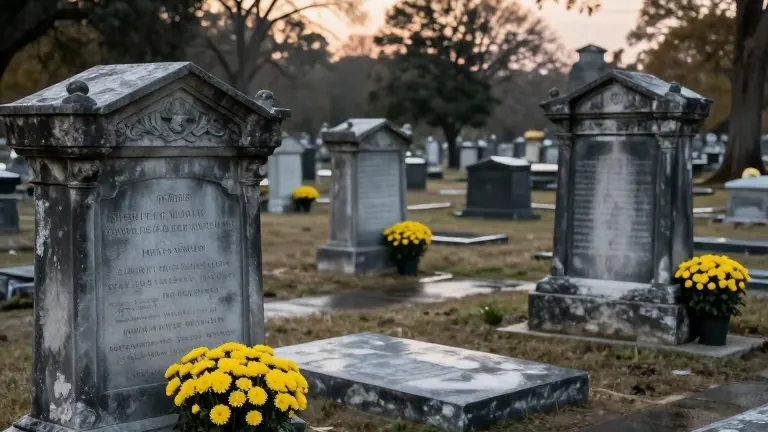
In New Orleans, the annual observance of All Saints Day on November 1 serves as a time to honor the deceased. For many residents, the holiday has taken on a new dimension following Hurricane Katrina. The 2005 storm flooded 80 percent of the city, washing away physical records of family history.
Wellington Brannon, 65, lost his visual connection to his sister, Terri Ann Brannon, who died in a car accident in 1999. Terri Ann was 36 at the time. Wellington kept her funeral program, senior yearbook, and prom photos from her burial at the Mt. Olivet Mausoleum in Gentilly. Katrina’s floodwaters destroyed the shelf of albums and keepsakes that held those items. He now relies on his daughter, Fallon Ann Brannon, to see his sister’s spirit in her work ethic and sense of humor.
The loss of physical artifacts has shifted how families approach remembrance. Darrin Francois, 26, uses online genealogy archives to trace his family history back six generations. He visited graves in Mount Olivet, Holt Cemetery, and Providence Memorial Park to leave flowers. Francois began his research in 2018 and recently provided digital photos of Wellington’s sister to the Brannon family. He also traced their ancestral lineage using DNA tests and oral histories from distant relatives.
Ann Macdonald, 64, also lost physical records in the storm. Her father’s collection of more than 300 music albums and her mother’s 20 photo albums were submerged in five feet of water in their ground-floor home. She rescued some photos that remain crumbly and difficult to see. Macdonald now hosts an annual family dinner on Christmas Eve to honor her parents, who married on that date. She also maintains her father’s garden to keep a connection to her childhood.
Robert Florence, president of NOLA Historic Tours, notes that All Saints Day reflects the city’s relationship with the dead more than any other holiday. He restored tombs in St. Louis Cemeteries No. 1 and No. 2. He observes that families use these sites to perpetuate genealogical narratives across centuries.
Photographers Keith Calhoun and Chandra McCormick documented the storm’s impact in their 2008 project, Katrina: An Unnatural Disaster. The couple had been documenting Black life in New Orleans for four decades. Before evacuating, they packed their negatives into plastic bins in their Lower 9th Ward home. Eight feet of floodwater soaked two-thirds of their archive. They froze the waterlogged images to stop deterioration. The mold and water created abstract patterns on the negatives, which they later scanned and printed. One-third of their collection survived intact.
The Archdiocese of New Orleans publishes a schedule for priests to bless graves during the holiday. The day remains a Holy Day of Obligation for Catholics. Families continue to visit cemeteries to clean and decorate sites with candles and chrysanthemums. Some residents now use digital tools and shared biological traits to fill the gaps left by the physical losses of 2005.