Mexico City parade draws 1.6 million
The tenth edition of the Day of the Dead parade in the Mexican capital generated $2.94 billion in economic activity and featured 4,000 artists.
By Jonathan Fedorov ·
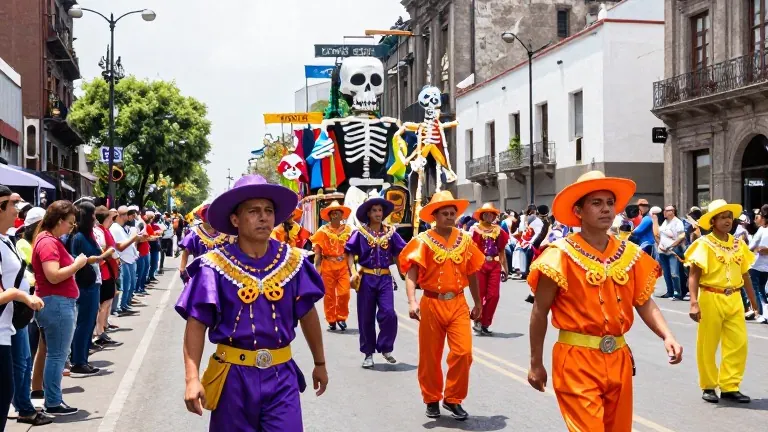
1.6 million people attended the tenth edition of the Gran Desfile de Día de Muertos in Mexico City on Saturday, November 1. The parade moved through the capital’s central avenues, filling the streets with purple, orange, and yellow decorations that replaced the usual gray tones of the city.
The event started at 2:00 p.m. local time at the Diana Cazadora roundabout on Paseo de la Reforma. Participants marched toward the Zócalo, where a monumental Catrina figure stands 33 meters tall. Approximately 4,000 artists participated in the procession, which included giant skeletons, floats, and performers wearing feather headdresses and masks.
The parade has evolved from a family tradition into a massive public spectacle. Miguel Ángel Mancera, former mayor of Mexico City from 2012 to 2018, organized the first event. He said the idea came from a scene in the James Bond film Spectre, where the protagonist walks through a crowd in the city center dressed as the dead. Since the movie, Mancera noted that people constantly asked when the parade would be held.
The celebration generated significant economic activity. Officials estimated that Day of the Dead festivities would yield 53 billion pesos, or about $2.94 billion, this year. That figure represents a 7 percent increase over the 2025 total. Street vendors sold crafts, masks, and flower headdresses along the route. Face painting stands were particularly popular, with makeup artists charging 11 dollars to transform visitors' faces into stylized skulls.
Angie Covarrubias, a 29-year-old makeup artist, reported a long line of customers waiting for their turn. Isabel Halsey, a 37-year-old American tourist, described the atmosphere as colorful, fragrant, and dramatic. She said she enjoyed the diversity of nationalities and personalities in the crowd. Naomi Tomi, a 27-year-old Japanese visitor, traveled to Mexico City specifically for the event after seeing the 2017 film Coco. She stated that the experience exceeded her expectations.
Roberto Montalvo, an academic at the Iberoamerican University, explained that the tradition is adapting to visitors. He noted the shift from an intimate celebration to a mass event. Heidi Meza, a 50-year-old local resident who has attended the parade since 2021, offered a different perspective. She suggested that people seeking the original Mexican tradition should visit Michoacán, calling the Mexico City parade a spectacle designed to attract foreigners.
The parade took place in a city with a population of approximately 9.1 million. The event marked the first decade of the celebration, which has grown into a major tourist draw. Vendors and artists created an informal fair along the parade route, contributing to the local economy during the holiday week.