Flock Safety Faces Nine Federal Bills as Bipartisan Push Builds
Rep. Greg Steube and other lawmakers propose strict limits on license plate readers, citing a lack of national oversight and recent Fourth Amendment rulings.
By Jonathan Fedorov ·
Rep. Greg Steube filed a bill to restrict federal agencies from using networked license plate readers, joining a growing bipartisan effort to regulate the technology. The Florida Republican sits on the House Permanent Select Committee on Intelligence and argued that the current lack of national rules has created a surveillance environment without clear boundaries. He stated that his proposed legislation, the FLAFO Act, would bar federal agencies from buying or operating these systems unless a judge issues a warrant.
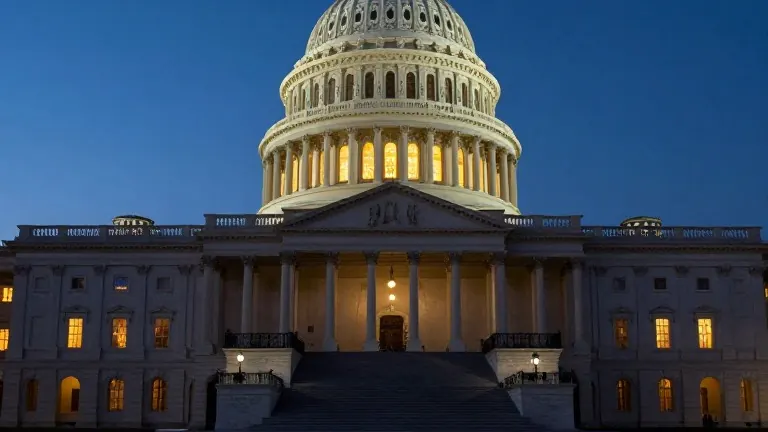
The legislative push follows a year-long investigation and a September Senate hearing. At least nine proposals are now pending or expected on Capitol Hill, ranging from warrant requirements to outright bans. These bills target Flock Safety, the largest provider of license plate reader technology to law enforcement in the United States. Flock claims its network includes more than 120,000 cameras across 49 states, with over 6,000 agencies connected to its data-sharing platform.
Critics argue that the system allows small departments to search data from tens of thousands of distant cameras. Steube described this connectivity as a double-edged sword, noting that while the technology helps solve crimes, its broad scope invites abuse. He pointed to a growing list of officers fired or arrested for personal or retaliatory searches. A spokesperson for Flock said the company supports bipartisan legislation that adds privacy and accountability guardrails while preserving law enforcement's ability to use the tools responsibly.
Sen. Ron Wyden, D-Oregon, said he has been pressing Flock for answers for over a year. He characterized the issue as one of warrantless mass surveillance and noted that the company initially stonewalled his inquiries. Wyden urged local communities to make the decision to install or remove cameras a local choice, arguing that residents want to call the shots rather than have the technology imposed by federal policy. He maintained that the vendor and law enforcement share the responsibility to strike a balance between liberty and security.
Legal challenges have intensified the pressure on Congress. In October, a federal judge ruled that an Oklahoma officer's warrantless use of Flock technology violated the Fourth Amendment. The judge described the system as a large-scale, dragnet-type surveillance mechanism that catalogs whereabouts over extended periods. This ruling supports the view of lawmakers like Steube, who believe Congress must write the rules to ensure the technology operates within the constitutional framework.
Other bills include the Protection Against Mass Surveillance Act introduced by Rep. Tim Burchett, R-Tennessee, which would bar federal agencies from operating automated surveillance systems. Rep. Alexandria Ocasio-Cortez, D-New York, introduced the Ban Flock Act to prohibit federal use without specific congressional authorization and limit data retention to 48 hours. Rep. Pat Harrigan, R-North Carolina, proposed the ALPR Accountability Act of 2026, which requires warrants for queries and mandates the deletion of records within one day.
Lawmakers from both parties agree that action is needed, though they differ on the specific mechanisms. Sen. Josh Hawley, R-Missouri, promised legislation requiring mandatory audits and limits on data retention. Sen. Raphael Warnock, D-Georgia, stated that protection from harassment and over-surveillance is a bipartisan priority. The proposals aim to replace the current patchwork of local rules with a unified national standard.