EU Review: Terror Listing for Russia's GRU
Brussels lawyers are checking whether a court ruling can clear the way to classify Russia's military intelligence agency as a terrorist group.
By Idris Romero ·
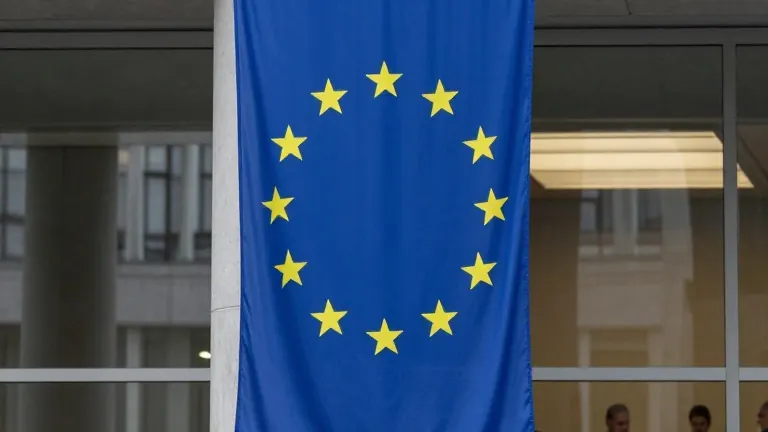
The European Union has begun a legal review to determine if it can designate Russia's military intelligence agency, the GRU, as a terrorist organization. Diplomats and lawyers in Brussels are first examining whether such a move is permitted under EU law, and second whether the bloc's 27 member states would support it. The inquiry follows a series of hybrid attacks on EU states that investigators have linked directly or indirectly to the GRU.
EU rules require a terrorist designation to be based on a prior court decision in an EU member state or a trusted third country. The January designation of Iran's Islamic Revolutionary Guards Corps relied on a 2023 ruling by the Dusseldorf higher regional court. That court found an arson attempt against a synagogue in Bochum in 2022 had been planned and carried out by the Iranian organization. Previously, EU terror listings had been reserved for non-state actors such as Hamas or Al-Qaeda.
Finding an equivalent ruling for the GRU is proving difficult. Prosecutors in individual countries have charged GRU officers, often in absentia, with crimes such as espionage or attempted murder, but not terrorism. National penal codes restrict prosecutors to those technical definitions. In the Czech Republic, prosecutors named two GRU officers in connection with the 2014 Vrbetice ammunition depot explosions, but the suspects remain in Russia. In the 2018 Novichok poisoning of Sergei Skripal and his daughter in Salisbury, GRU agents were charged in absentia with attempted murder and the use of chemical weapons.
Lithuanian cases offer the closest parallels. In 2025, Lithuanian prosecutors charged 15 people with terrorism over incendiary devices that were meant for cargo planes bound for the United States and Canada and caught fire in warehouses in Germany, Poland, and the United Kingdom. Those defendants were GRU-recruited proxies rather than direct officers. A separate trial is underway in Lithuania over a September 2024 arson attack on a private military supplier in Siauliai that supports Ukraine; six foreign nationals are accused, and prosecutors allege a strong link to the GRU.
Even with a legal route, political agreement remains necessary. A terror designation requires unanimity among the 27 member states, and some governments want to keep diplomatic channels open with Moscow. Other officials say current measures are insufficient. The EU has already frozen GRU assets and imposed visa bans on its leadership. A formal listing would cover the whole institution, including officers not currently sanctioned, and would allow European prosecutors to target local proxy networks, including EU citizens. It would also permit EU-wide counterterrorism arrest warrants and integrate GRU operations into Europol's European Counter Terrorism Center.
The EU's sanctions work continues on a separate track. On October 12, foreign ministers approved the blacklisting of 1,600 new names, largely from the Russian military industry sector, bringing the total sanctioned since Russia's full-scale invasion of Ukraine in 2022 to over 4,600. A new proposal was presented to the 27 member states' ambassadors in Brussels on October 21, covering 12 individuals and 105 companies. Those named include Tatyana Kim, founder and CEO of the online retailer Wildberries. Foreign ministers meet again on November 16.