US Proposes New European Security Pact Before Ukraine Talks
White House officials outlined a framework for allied defense commitments as preparations begin for trilateral peace negotiations in Abu Dhabi.
By Idris Romero ·
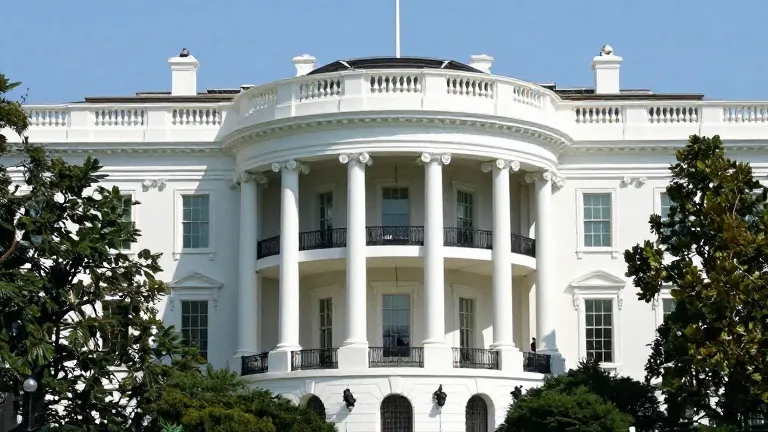
The United States has proposed a new framework for European security that includes specific guarantees for Ukraine. The plan aims to stabilize the continent while the Trump administration prepares for direct peace talks with Moscow and Kyiv. The initiative was announced on November 5 by Jared Kushner, the president's envoy.
Kushner detailed the proposal in a social media post following meetings in Brussels with NATO and European officials. The framework calls for permanent security consultations and improved crisis communication channels. It also includes measures for greater military transparency and reciprocal steps to lower escalation risks. Kushner stated that the plan would respect the sovereignty of every nation. He confirmed that NATO would remain the central pillar of European defense.
President Donald Trump met with Russian special envoy Kirill Dmitriev at the White House on November 5. Trump told reporters that a major agreement involving all of Europe was near. "It's going to be a big agreement, and it's going to involve more than Ukraine," Trump said. He predicted that everyone would be thrilled by the outcome. The administration plans to continue discussions through a format involving Ukraine, NATO, the EU, and other partners, with Russia participating in the peace process.
Experts have raised questions about the scope of the new European security architecture. Glen Howard, president of the Saratoga Foundation, said the move might aim to reassure allies while pressuring Russia. However, he noted that Kremlin adviser Yury Ushakov recently called for a return to NATO's pre-1997 borders. "Since when does Russia get a say about the future of NATO and undoing the eastern flank?" Howard asked. He warned that discussing NATO's posture could set a precedent for future administrations.
John Herbst, a former US ambassador to Ukraine, expressed skepticism about the upcoming talks. He pointed to Russian Foreign Minister Sergei Lavrov's recent statement that Russia would make no compromises. Herbst also noted the reported appointment of Vladimir Medinsky to lead the Russian delegation in Abu Dhabi. "That's an impossible task," Herbst said regarding the need to satisfy both Ukrainian and Russian security demands. He argued that Russia wants to stop fighting without offering serious guarantees.
Trilateral US, Ukraine, and Russia discussions are scheduled for November 10 and 11 in Abu Dhabi. These will be the first such talks since February. Mark Temnycky of the Atlantic Council expects incremental progress but not a breakthrough. He identified territorial disputes and postwar security as the main obstacles. The World Bank and other international bodies estimate Ukraine's reconstruction needs at nearly $588 billion over the next decade.
Parallel diplomatic efforts are underway to build momentum. First Lady Melania Trump hosted Russian and Ukrainian representatives on November 5 to mark a cease-fire in Oleshky. Nearly 800 people were evacuated during the pause in fighting. "We have chosen humanity over war," Trump said. President Volodymyr Zelenskyy is in Spain for talks on air defenses. He said his team is coordinating with partners to achieve concrete results on security issues before the Abu Dhabi meeting.
The White House meeting between Trump and Dmitriev drew attention because the Russian envoy is under US Treasury sanctions. A US official said waivers were issued to allow Dmitriev's visit. No decision to remove him from the sanctions list has been announced. European leaders told reporters on November 5 that they do not believe Russia is ready to make genuine concessions on security or territory.