Supreme Court restarts Texas border wall
The high court ruled Monday that a lower court order blocking construction in Big Bend National Park was invalid, allowing federal work to resume.
By Idris Romero ·
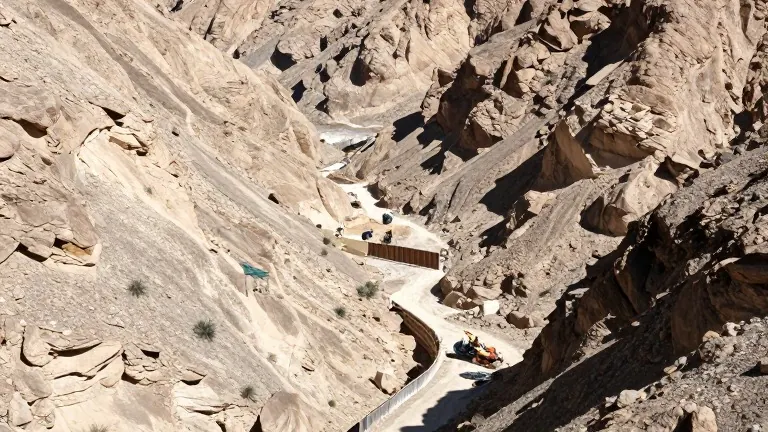
The U.S. Supreme Court permitted the federal government to resume building border barriers in west Texas on Monday. The court issued a five-page decision that overturned a temporary injunction from a federal judge in El Paso. This ruling allows the Trump administration to proceed with plans for hundreds of miles of security infrastructure.
The dispute centers on construction within Big Bend National Park. The planned project includes 30-foot-tall steel barriers, patrol roads, and surveillance systems. A lower court had previously paused these efforts, but the Supreme Court stated that the district judge lacked the authority to issue the stop-work order.
The high court noted that federal law grants the Department of Homeland Security the power to waive certain environmental protections. Secretary Markwayne Mullin can invoke this authority to prioritize speed in border construction. The unsigned opinion described this legal mechanism as a clear preference for rapid barrier installation over the specific harms alleged by the opposing parties.
Justice Ketanji Brown Jackson was the sole dissenting justice in the decision. The court quoted the government’s position that the injunction prevented the administration from pursuing its compelling interests in border security and integrity.
The Center for Biological Diversity, an environmental group, filed the original lawsuit. They were joined by a local nonprofit protecting a historic church and a private landowner who faces potential property loss. Laiken Jordahl of the Center for Biological Diversity said the decision allows contractors to return to the region. She described the upcoming work as involving the dynamiting of canyon walls and the bulldozing of desert terrain.
Solicitor General John Sauer called the previous injunction baseless in a request filed in late October. The government argued that a gap in border defenses in Big Bend would act as a magnet for cartels. CBP data shows the Big Bend Sector covers nearly 500 miles of border. This area accounts for more than a quarter of the U.S.-Mexico border but typically records the fewest encounters along the Texas border.
The lawsuit claimed the construction plans are unconstitutional and would cause irreparable harm to Big Bend residents. Opponents across the political spectrum have voiced concerns about the impact on tourism, wild animals, and Indigenous sites in the region's rugged terrain.