Senate Stalls: Permanent Daylight Saving Bill Faces Gridlock
Leaders block a House-passed measure to end biannual clock changes, defying presidential pressure and citing winter sunrise concerns.
By Tunde Martin ·
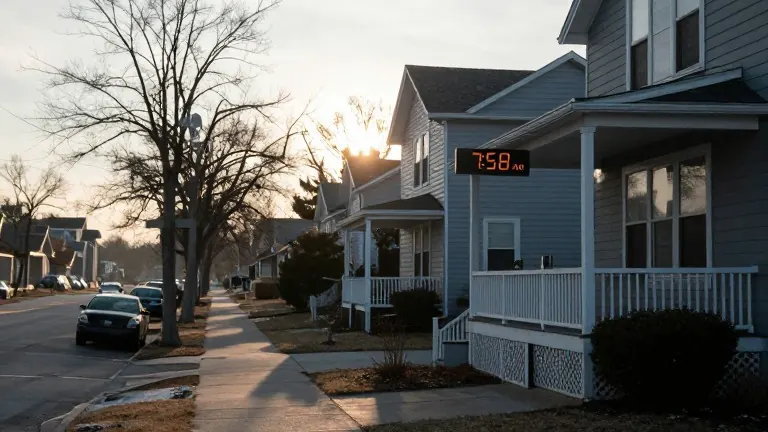
Only 12% of American adults support the current biannual clock change system, according to an AP-NORC poll conducted last year. Despite this majority opposition to the status quo, the Senate is unlikely to act before the end of 2026 on a bill that would make daylight saving time permanent. The legislative standstill defies the aggressive push by President Donald Trump to pass the House-approved measure, leaving many Americans who dislike adjusting their clocks twice a year without near-term relief.
The issue resurfaced as the country prepared to turn clocks back an hour on Sunday, November 1. Senators are currently holding up the legislation, creating a stalemate between those who want more afternoon daylight and those who fear extremely late winter sunrises. The debate has become a point of tension between the White House and Senate leadership, with the President actively lobbying his own party members to secure a vote.
Senator Tom Cotton, R-Ark., has emerged as the most vocal opponent of the change. A member of the Republican leadership, Cotton argued that Congress has previously enacted permanent daylight saving time only to repeal it after citizens complained about early morning darkness. He noted that the practice led to what he described as absurdly late sunrises in the winter, a precedent he believes the current Senate should heed.
Trump targeted Cotton earlier this month after the senator blocked progress, posting his personal cellphone number on social media and urging him to get the bill passed. The President argued that afternoon sunshine is superior to morning light and claimed that criminals prefer working in the dark. He recently renewed his call on Truth Social, stating that a vast majority of the country wants the change, despite the Senate's inaction.
Other Republican senators, particularly those from northern states, have joined Cotton in opposing the measure. Senator Mike Rounds, R-S.D., warned that the change would send children to school in the dark. Senator Bernie Moreno, R-Ohio, was blunt in his assessment of the bill's chances, telling reporters this month, "No way" it would pass the Senate anytime soon. Senator Todd Young, R-Ind., added that Senate Republican leaders consider the House bill a non-starter.
The President, an avid golfer, has linked the policy to personal convenience and safety. He argued that permanent daylight saving time would provide more time for his golf game and reduce the dangers of changing clocks on high structures like churches and municipal buildings. He also contended that the ritual is an unnecessary waste of time, even for those with digital clocks that adjust automatically.
Historical precedent weighs on the current debate. In 1973, Congress instituted permanent daylight saving time during an energy crisis as a temporary trial. The law was repealed by the following October after public support dropped sharply, partly due to concerns about children walking to school in the dark. More than 50 years later, that specific experiment has faded from public memory, even as the desire to eliminate the time change has grown.
Senator Rick Scott, R-Fla., has led Senate efforts to make the change permanent. Scott signed state legislation in 2018 allowing Florida to remain on daylight saving time year-round, pending federal approval. He described the current practice as a decades-old annoyance that is more of a burden to families than a benefit. Several Democrats have also expressed support for ending the ritual.
Senator Ed Markey, D-Mass., supported Scott’s bill last year, stating that the practice negatively impacts the economy, health, and happiness. He called for an end to 4 p.m. winter sunsets. The American Medical Association and the American Academy of Sleep Medicine also support proponents of a single time standard. Senate Majority Leader John Thune, R-S.D., has not weighed in publicly on this specific House bill, though he has voted against similar versions in the past.
With the midterms approaching, time for legislative action is limited. Republicans predicted the bill will not come up for a vote after the Senate returns to Washington following the November 3 election. The House bill remains stalled as leaders weigh the political risks of implementing a change that previous administrations reversed after public backlash.