San Bernardino drones cut police response times by 70 percent
Department officials report the new aircraft have handled over 500 calls since their introduction two months ago.
By Jonathan Fedorov ·
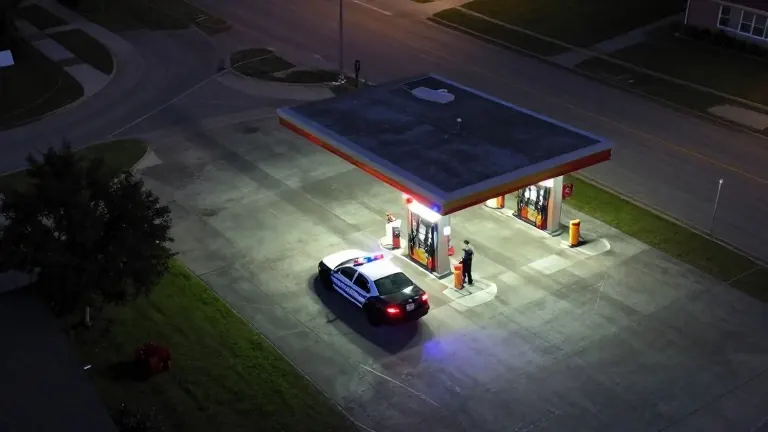
San Bernardino police officials claim their new drone fleet is arriving at crime scenes nearly twice as fast as human officers, a speed that is reshaping how the department handles emergency calls. The department added the aircraft to its real-time information center roughly two months ago. Since that rollout, drones have answered more than 500 calls for service, according to Capt. Nelson Carrington. The conflict centers on whether these unmanned eyes can replace the physical presence of a patrol car, or if they simply serve as a faster, safer precursor to it.
Carrington stated that the drones are arriving significantly faster than officers in many cases. He cited an average response time that is 70 percent quicker than the time it takes for a patrol unit to reach the same location. Beyond speed, the technology has already resolved 17 percent of calls without requiring officers to respond at all. This shift suggests a move toward a model where initial assessment is handled remotely, potentially freeing up ground units for other tasks.
The program relies on trained operators stationed at police headquarters rather than officers carrying the devices in their vehicles. These operators monitor calls for service and maintain direct communication with dispatchers and responding officers. Carrington described the workflow as direct and immediate, noting that the aircraft go straight to the location once directed. This centralized control allows for continuous monitoring of incidents without tying up a patrol car for the duration of the initial check.
A specific incident at a gas station illustrates the tactical application of the technology. During a recent call, drone operators observed a suspect removing an item from a vehicle and placing it on top of a gas pump. The operators then guided ground officers to the suspect and the location of the narcotics. The result was the recovery of the drugs and the custody of the suspect, a outcome Carrington presented as evidence of the system's investigative utility.
Officer Nathaniel Kolonics, who accesses the drone feeds from his patrol car, described the tool as a major shift for field personnel. He noted that having this real-time visual information improves his ability to catch offenders and enhances his personal safety. Carrington added that the drones are equipped with thermal imaging, which allows operators to detect suspects hiding in the dark by their body heat. This capability helps identify threats and locate individuals before officers arrive on scene.
Department leaders frame the drone initiative as one component of a larger effort to use data and technology to improve community service. Carrington acknowledged that the department is becoming more efficient but stated that the process is not finished. The department plans to continue expanding its use of these tools, aiming to further refine its response capabilities in the coming months.