Math Dispute and Rising AI Errors Challenge Trust in Scientific Research
A recent controversy over a solved equation and data showing nearly 90% of biomedical papers bearing AI traces have prompted calls for stricter human oversight in academia.
By Tunde Martin ·
The scientific community relies on a system of peer review and journal publication to validate new discoveries, but that system is currently under pressure from rapid artificial intelligence adoption. A recent dispute over a major mathematical proof has brought these tensions into sharp focus, revealing how AI tools are altering the pace and reliability of research.
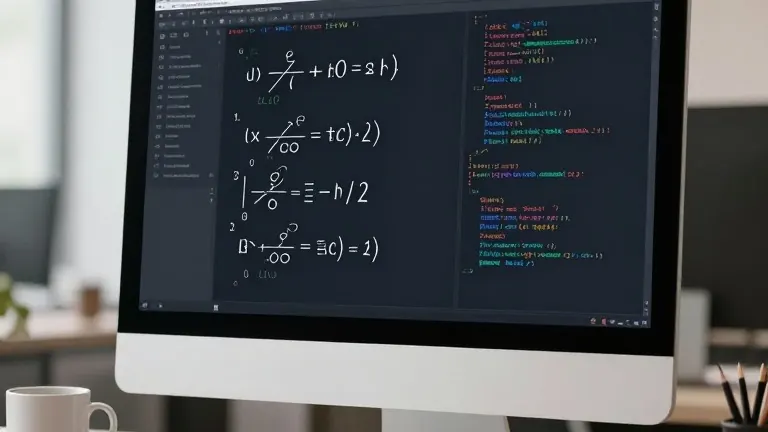
The controversy began in September 2026 when OpenAI announced that its AI agents had solved a long-standing problem related to the Navier-Stokes equations in 88 hours. The Clay Mathematics Institute, which manages the prize for this specific problem, stated the issue had been apparently settled but noted that its review process would take time. Hours before the announcement, Tristan Buckmaster, a mathematician at New York University, raised public concerns.
Buckmaster had been working on the same problem with Levent Alpöge, a mathematician employed by Anthropic. They stored their drafts in OpenAI's coding tool, Codex. Buckmaster said Alpöge was tipped off that news of their progress had reached OpenAI. He asked if his research, stored in the tool, could have fed into OpenAI's work, while stressing he was not accusing anyone of wrongdoing. OpenAI initially said it could not rule out that anonymized data from product use helped improve its models. Days later, the company stated that Buckmaster's prompts from the two months prior to the announcement could not have influenced the system.
This incident is part of a wider trend where AI is accelerating scientific output but also introducing new risks. Dr. Pushmeet Kohli, who leads science work at Google DeepMind, described the development of AlphaFold in 2020 as a watershed moment. AlphaFold accurately predicted 200 million protein folds in one year, a task that would have taken hundreds of millions of years in laboratory experiments. The firm released the results for free, and the project lead scientists received the Nobel Prize in Chemistry.
However, subsequent applications of AI have faced scrutiny. DeepMind claimed to have identified more than two million new crystal structures, with 380,000 considered promising for laboratory synthesis. Chemists Anthony Cheetham and Ram Seshadri from the University of California reviewed a random sample of these structures. In a paper in Chemistry of Materials, they concluded they had yet to find any strikingly novel compounds, arguing many were trivial adaptations of known materials. DeepMind rejected the charge, noting that swapping a single atom is how many useful materials were originally discovered.
A more pervasive issue involves the volume of AI-generated content in scientific journals. Prof. Dmitry Kobak of Ghent University searched more than one million biomedical research papers for trigger words favored by large language models. His team found that by December 2024, nearly 90% of the papers had AI fingerprints. Kobak told Nature that there is a risk the bias of the language model will permeate the scientific literature. This rise in content has led to a phenomenon described as research slop, where computers generate text and fake citations.
A team at Cornell University found that researchers were using AI to compile citations, resulting in around 147,000 pieces of phantom research being cited last year. Separately, a team led by Weixin Liang and James Zou at Stanford University analyzed referee reports for four major computer science conferences. They found that up to 17% of the text had been substantially modified by a language model. These findings suggest that the integrity of peer review is being compromised.
Publishers are responding to these challenges. Elsevier has developed 100 signals to flag papers for closer human scrutiny. Nature’s journals forbid AI-generated images and instruct referees not to upload manuscripts into AI systems. The website arXiv bans researchers for one year if they submit invented references. Prof. Sarah Main, a vice-president at Elsevier, said the company is focusing on research-grade AI that ensures the researcher remains in the driving seat.
Kohli of DeepMind argued that abandoning AI would be like computing without calculators, but he accepted that human guardrails are necessary. He stated that agents are currently imperfect and that someone must take accountability. His test for responsible use is simple: researchers must understand what the agent has done and take responsibility, rather than just specifying a problem and letting the machine write the paper.