Fall Lawn Care: Tools and Nutrients
Experts advise homeowners to test soil and aerate grass to prepare for winter dormancy.
By Tunde Martin ·
Homeowners preparing for the upcoming winter should focus on strengthening grass roots and managing thatch before the ground freezes. As temperatures drop and trees release their leaves, the primary goal of fall maintenance is not simply aesthetic. It is about ensuring the turf survives the cold months and emerges healthy in spring.
Local agriculture research and extension programs at colleges and universities offer the most reliable guidance for these tasks. These institutions study specific regional soil conditions and plant types. They provide detailed recommendations on which grass varieties thrive in a specific state. They also outline the correct timing for soil testing, watering schedules, and fertilizer application.
Fertilizing the lawn in the fall serves a distinct purpose compared to spring feeding. The process prepares the plant for dormancy rather than promoting rapid top growth. Homeowners must use products formulated specifically for grass lawns. Fertilizers designed for shrubs like azaleas contain different nutrient blends. Lawn fertilizers rely on three primary ingredients: nitrogen, phosphorus, and potassium.
Selecting the right product depends on the specific needs of the yard. A weed control option uses a technology that targets visible and hidden weeds to strengthen the lawn. However, applying too much fertilizer can encourage the growth of crabgrass. An alternative budget-friendly option promotes nutrient and water absorption while building deep roots. Some users reported that this specific product did not spread at the recommended rate. For those avoiding synthetic chemicals, a plant-based organic option offers a granular format that does not contaminate groundwater. It contains corn, which may attract insects.
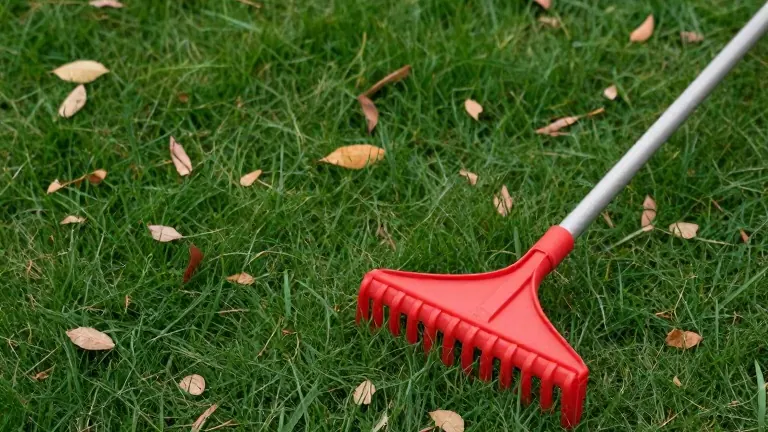
Removing fallen leaves is a critical step in the fall routine. While leaf blowers save time, raking serves a mechanical function. It loosens thatch, which is the layer of dead grass and organic material trapped between the living turf and the soil. Thick thatch prevents new seeds from germinating. An adjustable rake with an extendable handle allows users of different heights to work comfortably. The head of this tool expands to 23 inches or folds to eight inches. The pole adjusts between 24 and 63 inches. Some users noted that the handle felt weak during use.
Aeration addresses soil compaction and thatch accumulation. According to the Colorado State Extension, this process improves the root zone by allowing air, water, and nutrients to reach the soil. A tow-behind aerator attached to a lawnmower uses 32 galvanized knives to penetrate the ground. This tool covers large areas quickly but may require up to four hours for assembly. A manual push aerator offers a lower-cost alternative with two spikes. It pulls three-inch plugs from the soil. This method requires physical effort that may be exhausting for large properties.
Repairing bare spots caused by foot traffic or weather is another component of fall care. A mix of mulch, seed, and fertilizer can fill in bald patches. This product uses controlled-release technology to feed new seedlings. Homeowners may need to purchase multiple bags depending on the size of their lawn. A drought-resistant seed mix provides an affordable way to cover large areas. Some users reported that this specific mixture introduced weeds into their yards. For lawns that receive four to six hours of sunlight, a blend of tall fescue, perennial ryegrass, Kentucky bluegrass, and fine fescue is recommended. This disease-resistant mix contains fertilizer to stimulate growth.