Doña Chole serves two altars to keep her family's memory alive in Tijuana
In the Colonia Obrera, a woman in her mid-70s prepares separate ofrendas for children and adults, maintaining a ritual that dates back to the late 1980s when such displays were rare in the border city.
By Tunde Martin ·
Doña Chole, a woman in her mid-70s with a long white braid, maintains a daily ritual in the Colonia Obrera of Tijuana to honor her deceased relatives. She prepares two distinct altars each year: one for children visiting on November 1 and another for adults arriving on November 2. She refuses to mix the two groups, a practice that sets her home apart from the commercialized holiday displays that became common in the border region during the 1980s.
During the late 1980s, finding a family ofrenda in Tijuana was difficult. Halloween decorations dominated store windows, schools, and most autumn celebrations in the city. While walking a few streets in Oaxaca or Michoacán might reveal a household altar, residents of the border city often had to search specifically for them. Doña Chole lives in a neighborhood that was once characterized by dirt streets and improvised fences, where many families from Oaxaca, particularly Mixtec communities, settled to start new lives without severing their cultural roots.
A local shopkeeper in the area directed a reporter to Chole’s home, noting that she builds beautiful altars every year. The shopkeeper warned that Chole is somewhat shy and suggested the visitor follow instructions to a small house surrounded by many trees. Upon arrival, Chole was finishing her preparations in the patio. She greeted the visitors with a smile, stating that her dead would be happy to see their altar on television and that they might even laugh.
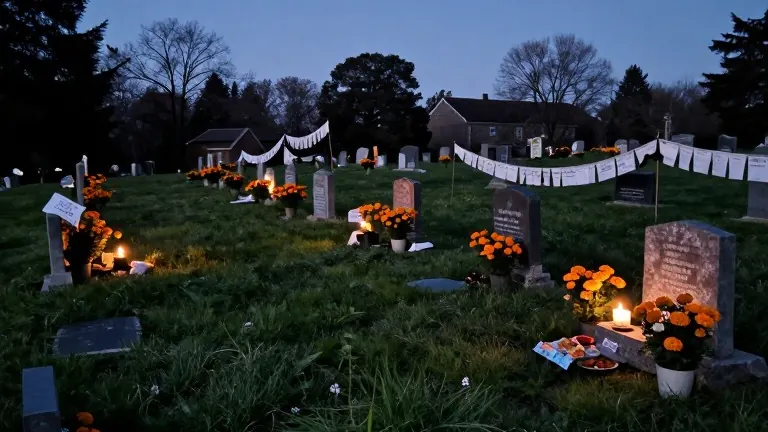
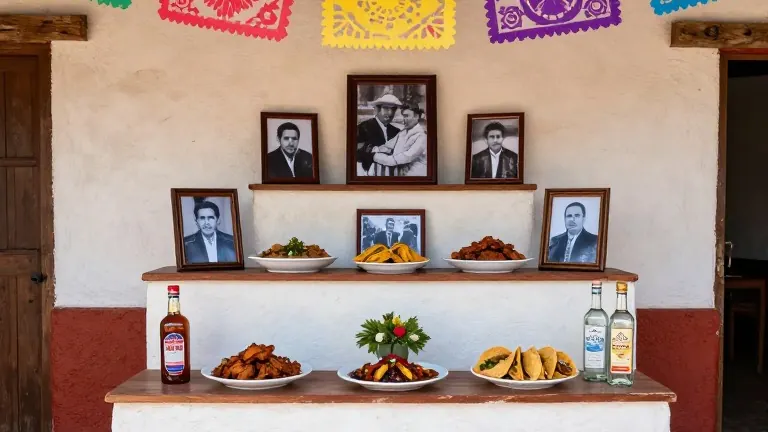
The altar for adults contained bottles of tequila, mezcal, pulque, and soft drinks on one level. Below those, plates of mole with chicken, quesadillas, fried tacos, candies, and pan de muerto were arranged. Photographs of her father, Pablo, her husband, Joaquín, and her son, Pedro, occupied the top shelf. Pedro had died only one year prior. Between the photos, the family had placed handwritten letters containing updates on birthdays and shared memories.
When asked if placing all the food out was a waste, Chole responded that the dead come because they know the family is waiting for them. She explained that they enjoy finding the things they liked in life and that they come to accompany the living. Chole said she is certain of their presence because they make themselves known through the wind, the rain, or hummingbirds. She described these signs as ordinary occurrences rather than supernatural events.
As the conversation continued, Chole pointed to the corner of the altar where several hummingbirds had appeared. The birds moved around the patio with a familiarity that suggested they were accustomed to the space. Chole spoke to them naturally, telling them that the food was there and that the family was waiting for them. The reporter and a cameraman stopped taking notes to observe the interaction, noting that Chole did not appear to be feeding a superstition but rather receiving guests.
Chole spoke of her dead with the same tone she used for a son living far away or a relative expected to arrive soon. As she walked through the altar, she corrected flowers and straightened photographs while sharing stories about her father, husband, and son. Her demeanor lacked solemnity; instead, it reflected affection and a custom cultivated over many years. The scent of roses was present in the air, though no rose bushes or cut roses were found on the property or the altars.
The reporter left with the interview material and photographs, having sought a report on the tradition in a city where Halloween seemed to gain ground annually. What was found was a woman preparing food for her dead and speaking to them as if they remained part of daily life. Chole viewed those days not as a cultural ceremony but as the visit of her family. She extended her hand toward the hummingbirds, reiterating that the food was ready and the family was waiting.