1,217 passengers caught in wave of fake European bomb threats
Airlines including Ryanair, LOT, and Wizz Air faced diversions and military escorts across five countries on Tuesday after a series of unverified alerts.
By Idris Romero ·
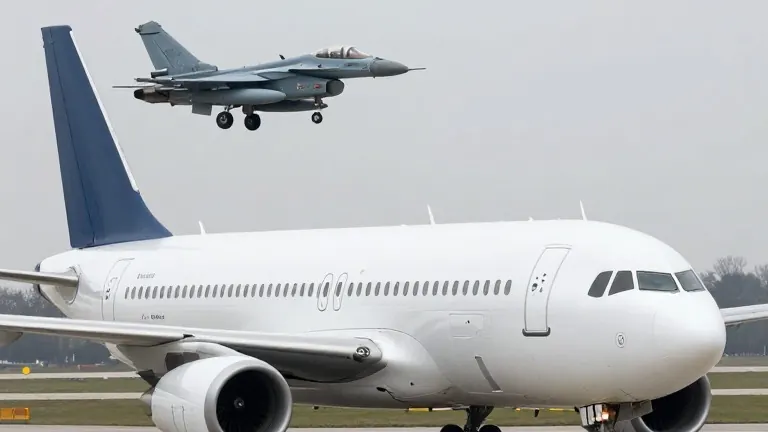
A total of 1,217 passengers and crew members were aboard or affected by a series of false bomb threats that disrupted air travel across Europe on Tuesday. The incidents forced airlines to divert planes, close runways, and scramble fighter jets, though no one was injured and no explosives were found in any of the checked aircraft.
The disruptions hit multiple carriers, including Ryanair, Polish airline LOT, Scandinavian Airlines, and Wizz Air. In Italy, a Ryanair flight from Lisbon landed at Rome’s Fiumicino airport after receiving an email claiming a bomb was on board. Police bomb disposal experts searched the plane, the passengers, and the baggage, finding nothing. The Italian Air Force confirmed it sent two Eurofighters to intercept and escort a separate Ryanair flight from Dublin to Rome following a similar report.
Poland experienced its own share of delays. A LOT flight from London’s Heathrow Airport to Warsaw was diverted to the nearby Modlin Airport after a threat. The airport closed temporarily while officials searched the jet, which turned up empty. Chopin Airport in Warsaw also received notice of a potentially dangerous item on a Scandinavian Airlines flight from Copenhagen. A runway closed as a precaution, but the plane landed normally and the passengers disembarked without issue. The matter has been handed to Polish police.
In southern Spain, a Ryanair plane from Manchester landed at Murcia Airport after a threat was raised. Francisco Lucas, the Spanish government’s delegate for the Murcia region, said officials inspected the aircraft and screened the 121 people on board. They found no explosives. In Bulgaria, authorities at Sofia International Airport checked two planes that had received threats while flying from Bergamo, Italy, and Dublin, Ireland. Transportation Minister Georgi Peev said the pilots received the information through airline channels and landed safely without being diverted. One of the threats was initially reported by a pilot.
The wave of threats followed a similar incident on Monday, when a Wizz Air flight from Luton Airport near London had to divert to Budapest. A Hungarian Gripen fighter jet escorted the plane to Liszt Ferenc International Airport. Officials found no threat after inspecting the aircraft. Bulgarian authorities said they were still trying to identify who sent the Monday threat. A flight from Tel Aviv to Vienna also made an emergency landing in Bulgaria last month after a bomb alert.
Matthew Borie, co-founder of Osprey Flight Solutions, suggested several reasons for the spike in incidents. He noted that a single threat can trigger copycats, or that a specific group might be acting. He also pointed to hybrid warfare tactics by state actors. Borie said there could be a Russian angle, but he cautioned that Iranian hybrid warfare is also active in parts of Europe. He told travelers not to be alarmed, noting that national authorities have coordinated response mechanisms, including the deployment of NATO fighter jets when necessary.
Greek authorities also investigated a threat against the Crown Iris, a Panamanian-flagged cruise ship in the port of Syros. Coast guard officers with a sniffer dog and a diver found no suspicious objects during an initial search. The ship, which was scheduled to sail for Haifa with 940 passengers and 597 crew, was being evacuated as a precaution while a specialist diving unit arrived for further checks. The ship’s presence in Greek ports has previously sparked protests from activists opposing the war in Gaza.